Nigeria Confirms Ebola Case in Abuja as Health Authorities Trace 44 Contacts
ABUJA, Nigeria — October 20, 2026
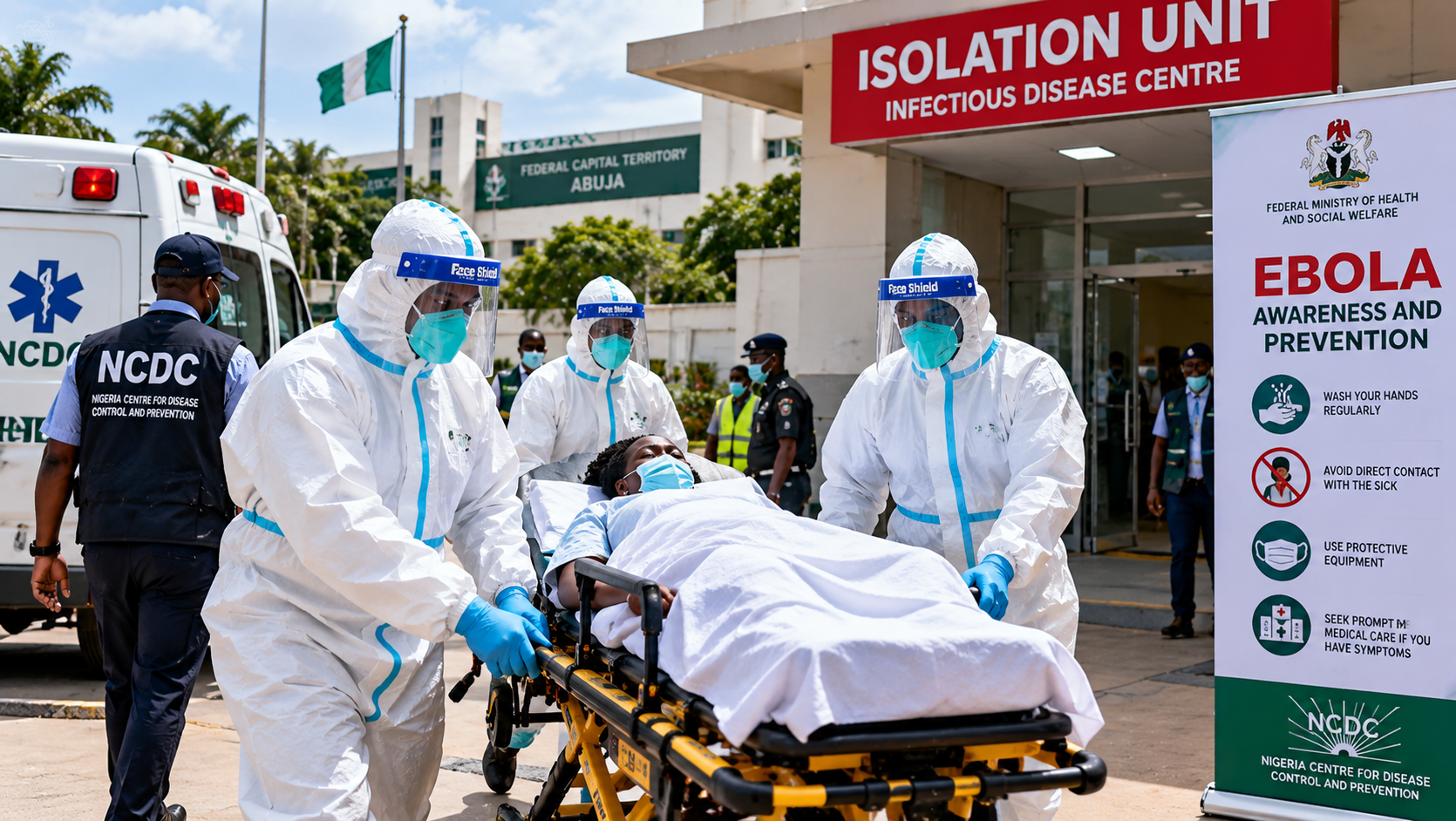
The Federal Government of Nigeria has confirmed an imported case of Ebola Bundibugyo virus disease in the Federal Capital Territory (FCT), Abuja, following laboratory testing.
The confirmation was announced on Tuesday, October 20, by the Federal Ministry of Health and Social Welfare. The patient is a woman who recently arrived in Nigeria from Uganda and is currently in isolation receiving medical care.
According to the World Health Organization (WHO), the patient's symptoms began on October 7, four days after her arrival in Nigeria. She sought treatment at a private health facility in Abuja on October 11, and laboratory tests confirmed the infection on October 20.
HEALTH AUTHORITIES TRACE 44 CONTACTS
The Federal Government said health authorities had identified 44 contacts who may have been exposed to the patient.
Contact tracing is underway to identify, assess and monitor people who may have come into contact with the patient, including healthcare workers, other patients, caregivers and travel contacts.
The identification of these contacts does not mean that they have contracted Ebola. Monitoring is a standard public-health measure designed to detect possible infections early and reduce the risk of further transmission.
Investigations are continuing to establish the likely source of the infection and reconstruct the patient's travel and exposure history.
The Federal Ministry of Health and Social Welfare, the Nigeria Centre for Disease Control and Prevention (NCDC), the FCT Health Services Secretariat and other relevant partners are coordinating the response.
HOSPITALS PLACED ON HIGH ALERT
Following the confirmation, the Federal Government called on public and private healthcare facilities across Nigeria to remain vigilant.
Healthcare workers have been urged to identify suspected cases promptly, follow strict infection-prevention and control procedures, and immediately report suspected infections to the appropriate public-health authorities.
Surveillance has also been strengthened, while support is being provided to the hospital where the patient initially received treatment.
The response is intended to identify possible exposures, protect healthcare workers and patients, and prevent further transmission.
WHAT IS EBOLA BUNDIBUGYO VIRUS DISEASE?
Ebola Bundibugyo virus disease is a serious illness caused by the Bundibugyo virus, a member of the Ebola virus group.
The disease can cause symptoms including fever, severe headache, weakness, muscle pain, vomiting and diarrhoea. Symptoms alone cannot confirm Ebola, as other illnesses can produce similar signs.
Ebola spreads primarily through direct contact with the blood or other bodily fluids of an infected person who has developed symptoms. Transmission can also occur through contact with contaminated objects.
People should not assume that someone has Ebola simply because the person has a fever or has travelled internationally. Medical assessment, exposure history and laboratory testing are important in identifying suspected cases.
PUBLIC URGED TO REMAIN CALM AND VIGILANT
Nigerians are advised to maintain good hygiene, avoid direct contact with the bodily fluids of anyone suspected of having Ebola, and follow instructions issued by public-health authorities.
Anyone who believes they may have been exposed should seek guidance from health professionals and cooperate with contact-tracing teams.
People who develop symptoms after a possible exposure should contact health authorities promptly and follow their instructions on accessing medical care.
Healthcare workers and members of the public are also encouraged to rely on verified information from official sources rather than spreading unconfirmed claims on social media.
NIGERIA'S PREVIOUS EXPERIENCE WITH EBOLA
Nigeria successfully contained an Ebola outbreak in 2014 after the virus was introduced into the country by an infected traveller.
That experience demonstrated the importance of early detection, isolation, contact tracing and coordination between health authorities.
The current case requires a renewed, coordinated response to determine whether additional infections have occurred and to prevent further transmission.
The Federal Government says investigations and contact-tracing activities are continuing. Further updates are expected as health authorities obtain more information.
Crime Watch Media News will continue to monitor official announcements and report verified developments concerning the Ebola situation in Nigeria.
Source : https://afro.who.int/countries/nigeria/news/nigeria-confirms-imported-case-ebola-bundibugyo-virus-disease
Nigeria Confirms Ebola Case in Abuja as Health Authorities Trace 44 Contacts
Nigeria has confirmed an imported case of Ebola Bundibugyo virus disease in Abuja. The patient is receiving medical care in isolation as health authorities trace and monitor 44 identified contacts to help prevent further transmission.