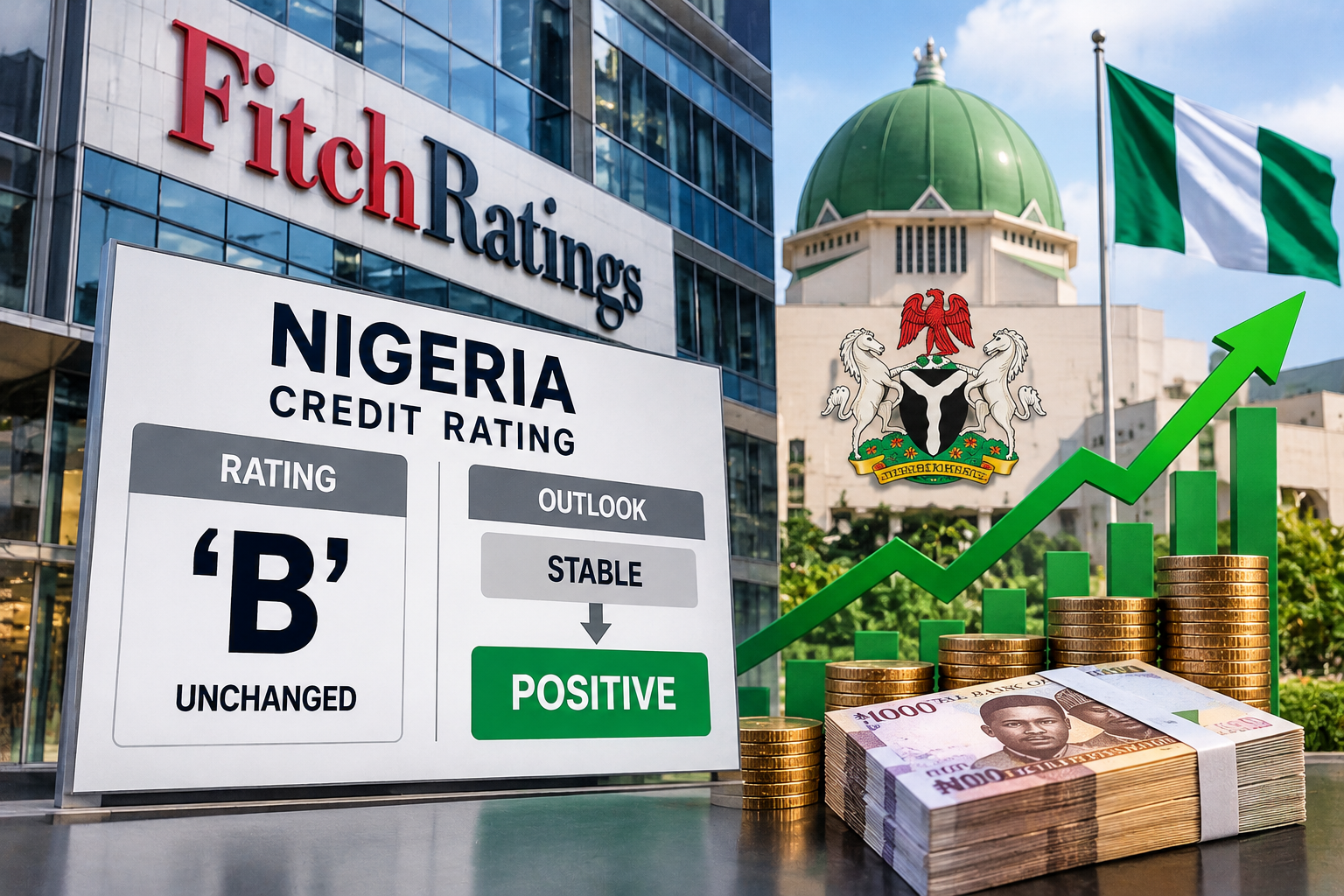
The Federal Government has welcomed Fitch Ratings’ decision to revise Nigeria’s credit outlook from Stable to Positive, describing the development as a reflection of progress in economic reforms and improvements in the country’s external financial position.
Fitch announced the revision on October 9, 2026, while retaining Nigeria’s long-term foreign-currency issuer default rating at ‘B’. The Positive outlook indicates that the rating could improve if current economic conditions and reforms are sustained. It does not mean Nigeria has already received a credit-rating upgrade.
According to the Federal Government, the ratings agency cited stronger foreign-exchange reserves, easing inflation and improved economic prospects among the factors supporting its decision.
Nigeria’s gross foreign-exchange reserves reportedly reached $54.9 billion as of September 25, 2026, compared with $32 billion in mid-April 2024. Increased portfolio inflows, export earnings, remittances and more formalised foreign-exchange transactions were identified as contributors to the improvement.
Fitch also projected that Nigeria’s economy would grow by 4.3 per cent in 2026, compared with 4 per cent in 2025. The agency expects growth to remain above 4 per cent in 2027 and 2028, although households and businesses continue to face cost pressures.
Despite the improved outlook, significant risks remain. Fitch highlighted Nigeria’s fiscal pressures and high government debt-servicing costs. Sustaining reforms, improving revenue collection and maintaining foreign-exchange stability will be important to strengthening the country’s credit profile.
A credit rating helps investors assess a government’s ability to meet its financial obligations. A more positive outlook can support investor confidence, but it does not automatically guarantee lower borrowing costs or an immediate improvement in living standards.
The Federal Government’s response comes as policymakers seek to consolidate recent economic changes. The long-term impact will depend on whether improvements in reserves, inflation and public finances can be sustained.
FG Welcomes Fitch’s Positive Outlook on Nigeria, but Credit Rating Remains at ‘B’
The Federal Government has welcomed Fitch Ratings’ decision to revise Nigeria’s credit outlook from Stable to Positive, while the country’s long-term credit rating remains at ‘B’.